
The NVC Model: Conversations without character attacks


Someone's been late to the last three meetings. You need to say something. You don't want to make it personal but you also don't want them to shut down the second you open your mouth.
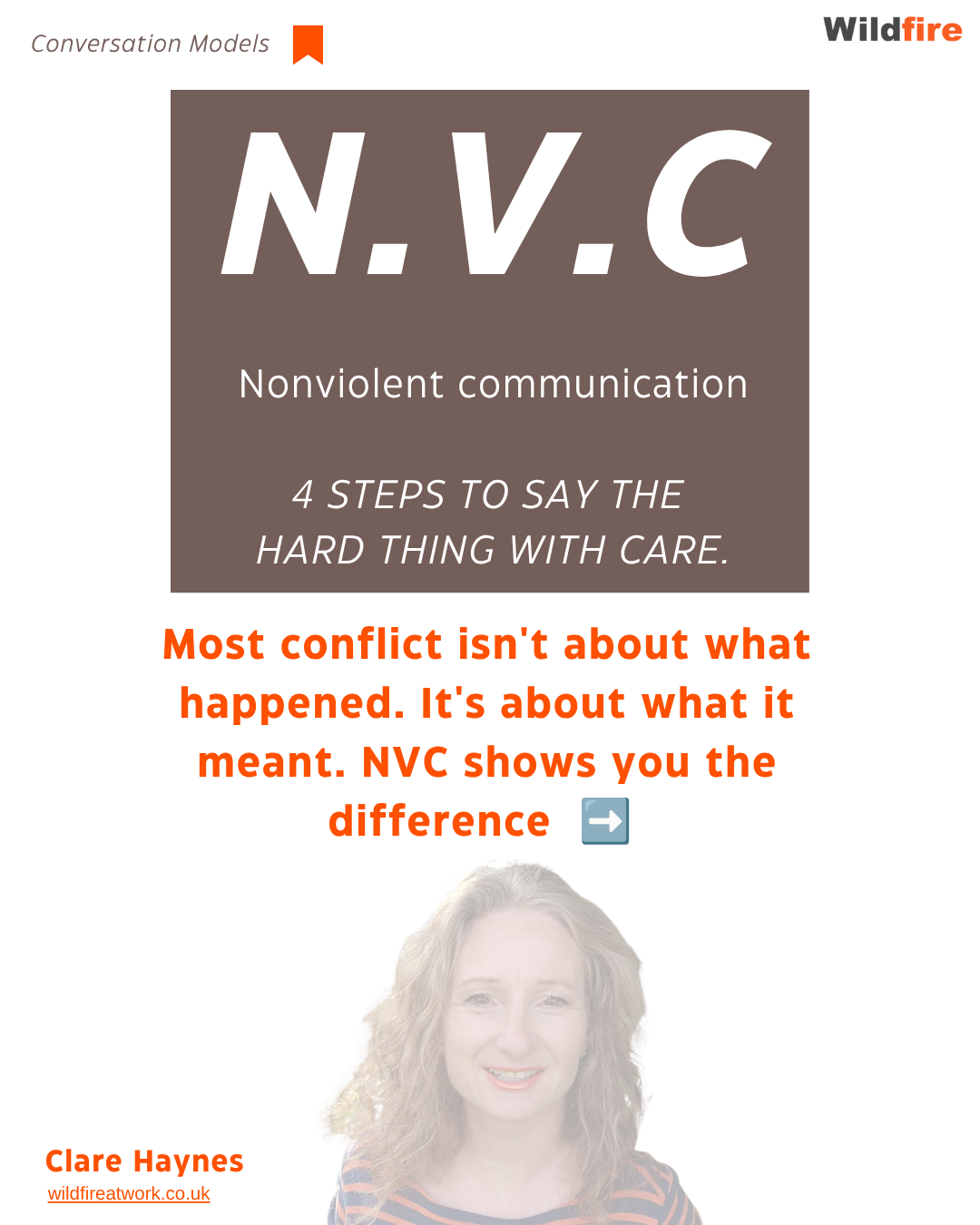
The NVC (Nonviolent Communication) is a classic model to help in that exact moment. The model handles the actual facts, feelings, needs, and what’s next, without character attacks or finger-pointing.
NVC is a four-step communication framework — Observation, Feelings, Needs, Request — developed by psychologist Marshall Rosenberg in the 1960s. It separates what actually happened from what you made it mean, and needs from demands. That single distinction is what makes the hard conversation possible without triggering defensiveness.
What Clare Haynes says in practice:
Whereas the SBI model gives an easy structure, the NVC is especially helpful in emotionally charged situations.
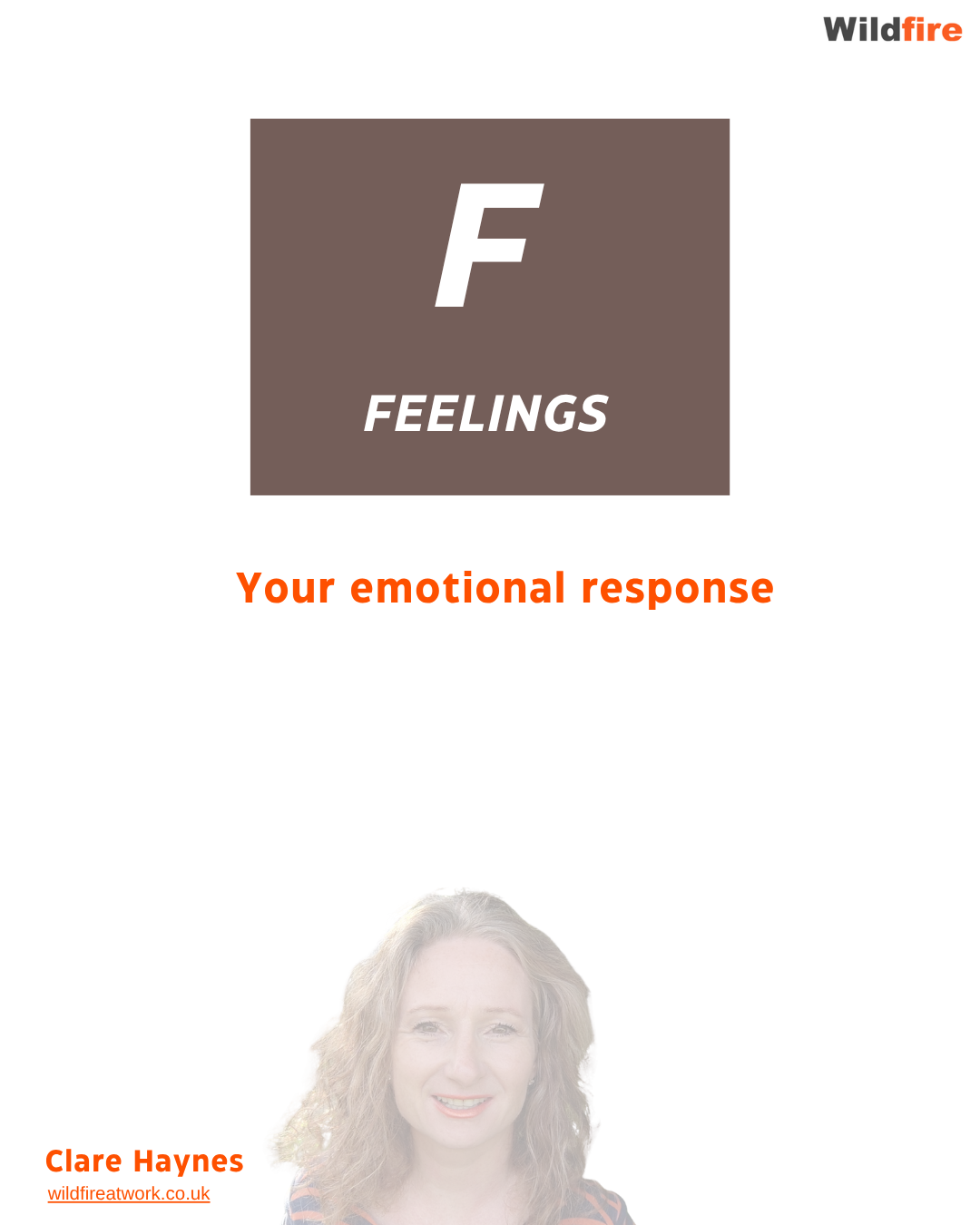
The Feelings step helps to articulate the uncomfortable but necessary. With boards, and all levels of management, I’ve seen leaders get stumped as soon as it comes to expressing how they feel, in a way it doesn’t hinder the conversation. Over more than two decades, I’ve noticed how often it’s delegated to another manager or HR.
Brits aren’t known for saying directly how they feel and it can get dressed up in management speak, which is confusing and loses meaning. People walk away none the wiser and the undesirable behaviour repeats.
A tip: With the NVC, feelings can be expressed by saying “I’m concerned about..” if “I feel..” isn’t comfortable.
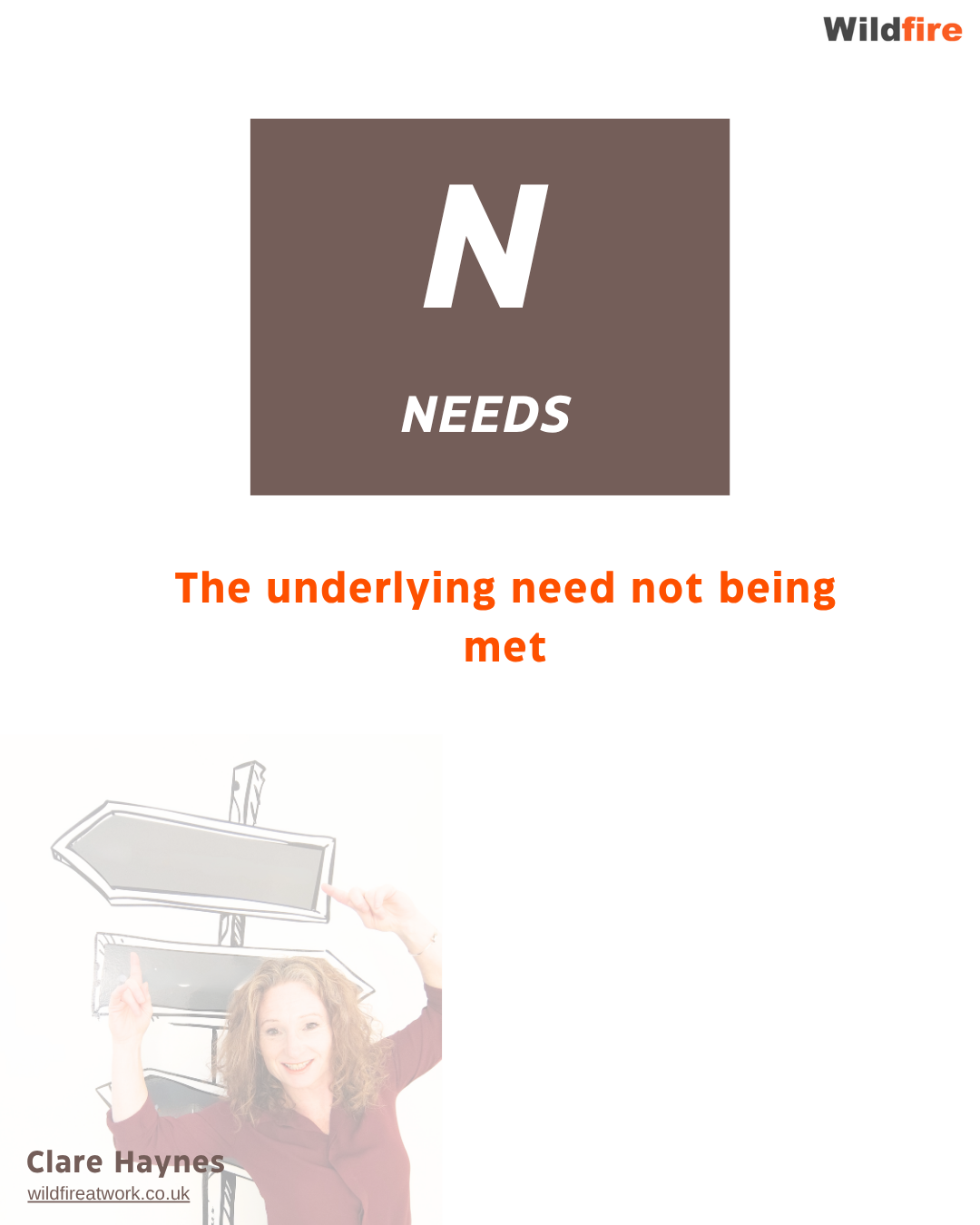
Where this model turns the corner of the conversation is with the Needs stage. It adds weight and sets up the request, which gives the conversation more flow, and greater chance of co-operation.
Frequently asked questions about NVC
-
NVC stands for Nonviolent Communication.
It is a four-step framework — Observation, Feelings, Needs, Request — developed by Marshall Rosenberg to help people communicate honestly without triggering defensiveness.
-
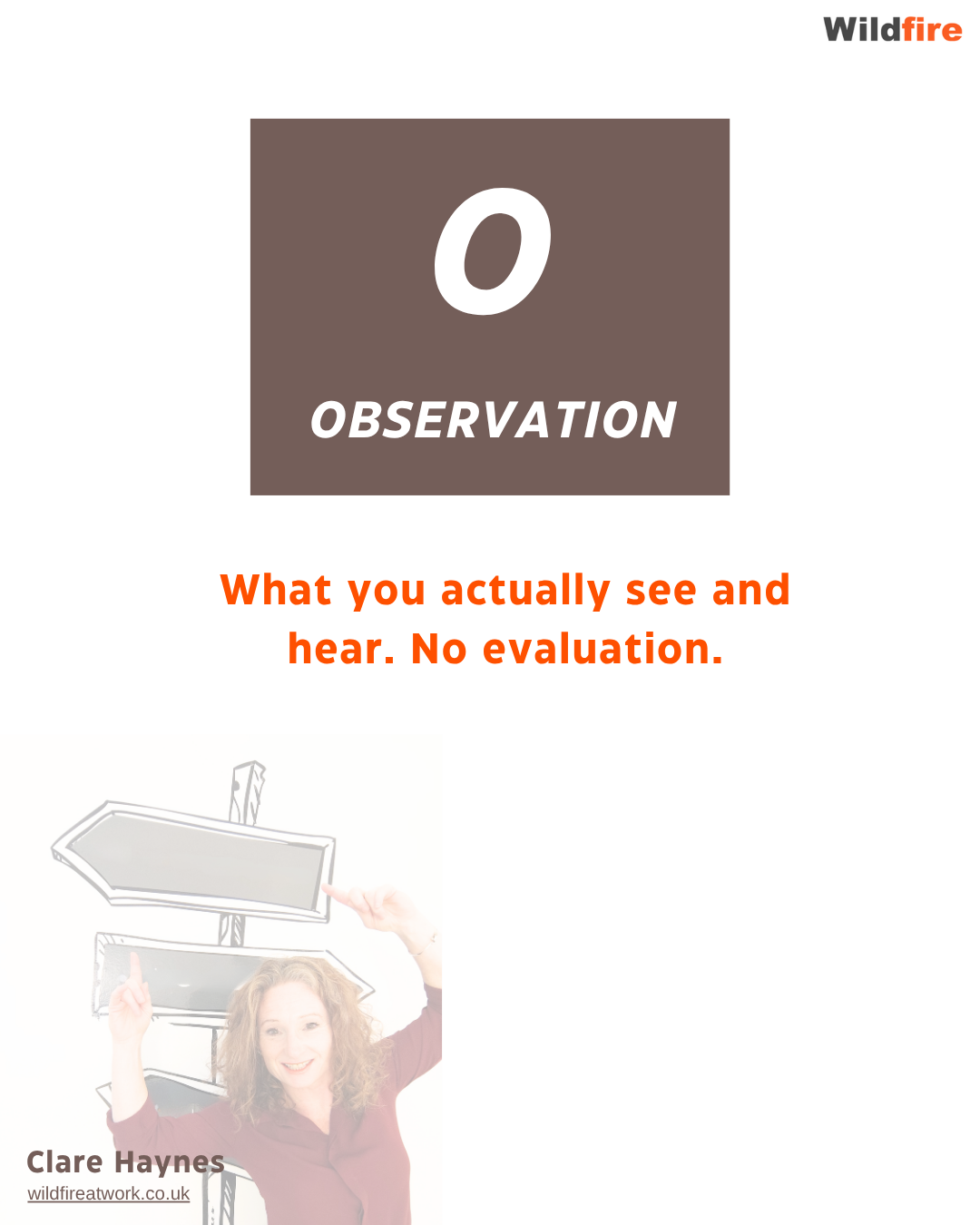
(1) Observation
Describe what you see or hear without evaluation;
(2) Feelings
Share your genuine emotional response;
(3) Needs
Identify the underlying unmet need;
(4) Request
Make a specific, positive, doable ask
-
An observation is a fact anyone could agree on. An evaluation mixes fact with interpretation. Observations invite reflection; evaluations invite argument.
-
Yes, with language calibration. The Feelings step requires care in many UK workplaces. Expressing concern or discomfort works when used without clinical emotional or management-speak vocabulary.
-
NVC was developed by psychologist Marshall Rosenberg in the 1960s.
He founded the Centre for Nonviolent Communication (CNVC) and detailed the model in Nonviolent Communication: A Language of Life (1999).
Related frameworks in the Wildfire library
you might also find these useful:
• SBI
• OARS
• The 3 Conversations
• Radical Candor
Source: Marshall Rosenberg · Nonviolent Communication: A Language of Life (1999) · cnvc.org · Wildfire Conversation Frameworks Library
See → speaking, training, coaching, difficult conversations statistics, and about Wildfire and Clare